The Long Way Down
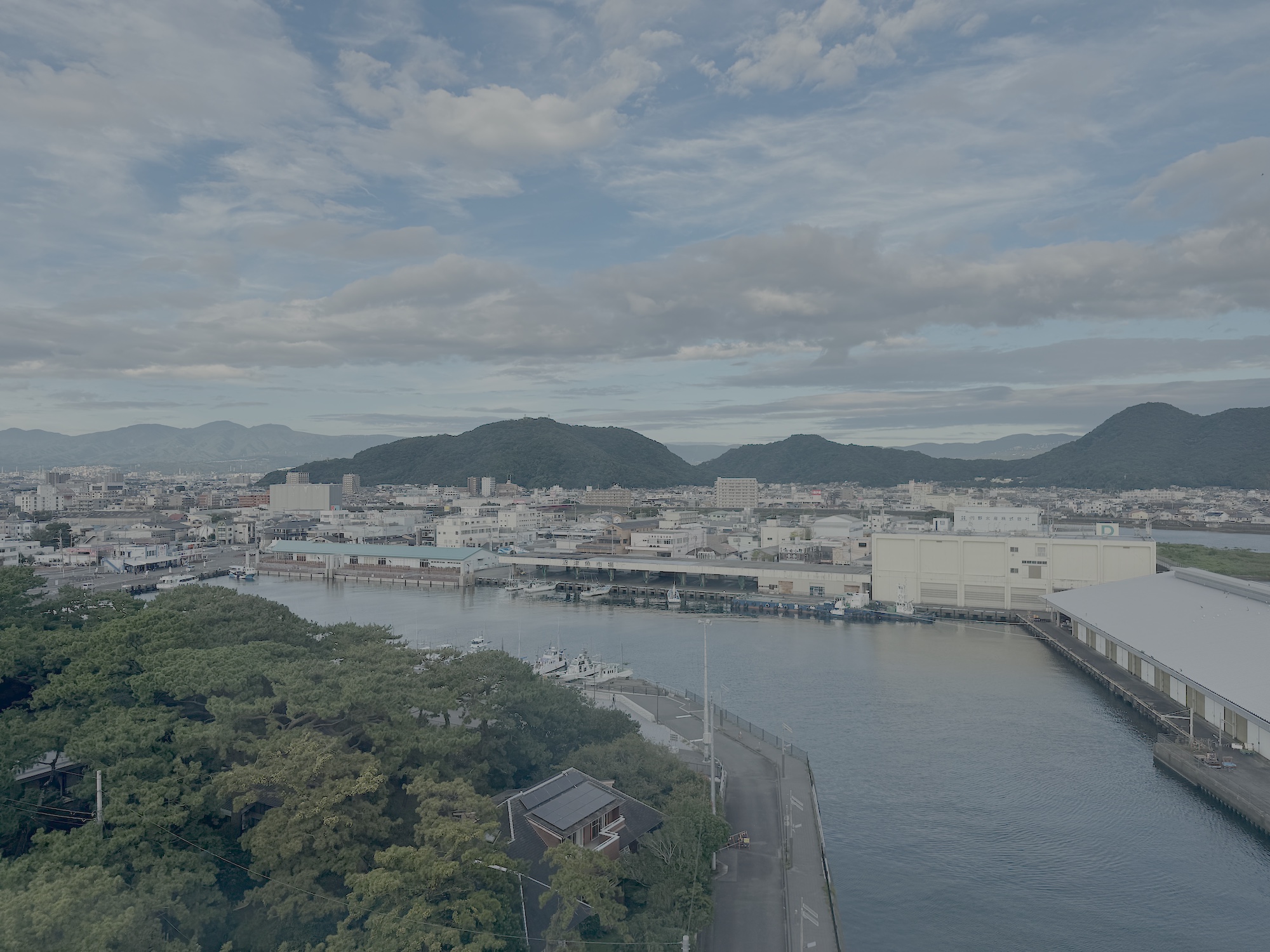 Looking over Numazu city
To see the lesser seen parts of the country, I take a trip to Fukuoka.
There are many convenient ways to travel from my home station in Kanagawa to my final station Hakata, such as the Shinkansen bullet train which takes around 5-6 hours or by plane which takes under 2 hours. But to fully experience the stops in between, I decided to only take local and express trains.
Instead of just a few hours, this trip would take around 20 hours just on the train.
When I initially saw that number, I thought it to be unreasonable. After all, this isn’t just an extra hour or even ten, this would require the same amount of travel time for the whole trip but then to repeat it every day. However, the more I thought about it, the more the sense of adventure kept nagging me.
Eventually, I decided to head to the ticket office and purchase a ticket to Fukuoka city.
This trip would take place over six days and would require around 4-5 hours of travel per day.
Purpose
I am writing this with two reasons in mind. One, for those who are curious about the lesser known places in Japan and would like to follow me on an adventure and two, as a guide for those who may want to do a similar trip in the future. On each post, I’ll include some tips and tricks to know if you want to do a similar trip yourself and hopefully you won’t repeat the same mistakes I made.
This style of travel is not for everyone. It requires long hours, early mornings, late nights, and an much flexibility. If you are able to push through though, I guarantee you will experience Japan like no other.
A note on my first long train trip
Just as a heads up, when reading these posts, one thing may become clear: I stopped at a lot of big cities along the way. This may seem contrary to the spirit of the blog and as I set this up to be a log of my rural trips! The route I took did stop at a lot of the same spots that a normal Shinkansen would stop at, however I also stopped at a lot of places a Shinkansen does not stop at. Just to see if this type of trip is feasible, for my first trip I wanted to take a route that had less risk than going straight for the extremely rural routes where the scheduled trains only come four times a day.
I don’t mean to spoil too much of the future posts, but with the overwhelming success and lessons learned from this trip, I now have the knowledge and confidence to attempt a more rural trip next time.
Logistics
Here are the tools I used while planning. Each one was incredibly helpful and I would recommend using each one when planning a trip of your own.
Jorudan (ジョルダン)
While Japan’s trains are world famous for being punctual and reliable, such a long trip would require dozens of transfers, 22 in fact, and coordination to be possible. Jorudan would prove to be indispensable. Using the “青春18きっぷ” filter allows you to filter by just local trains. Though the website is great at finding direct routes between stations, layovers would all have to be calculated manually.
Google Maps
The go-to for information on almost any location. I highly recommend using Google Maps to find activities, points of interest, and restaurants along the route, however I would recommend against using Google Maps for train schedules. While it has up to date information on train lines and statuses, it lacks many good features for planning routes. I would use Jorudan for finding train routes.
JR Ticket Websites (e5489/えきねっと)
The JR online ticket websites such as e5489 for JR West and Ekinet for JR East allow you to buy upgraded seats in advance. The only routes I could purchase an upgraded seat was:
- Kawasaki - Atami (Green Car, 600 JRE points or 1000 yen)
- Kusatsu - Akashi (A Seat, 600 yen)
I would highly recommend purchasing both. The Tokaido like to Atami is a normal Tokyo commuter train with very little seating and the train to Akashi runs between Kyoto, Osaka, and Himeji so it can get crowded. Reserving a seat ensures you arrive at each stop well rested and ready to see whatever’s next.
Coming soon
With the introduction out of the way, next week I’ll be sharing my first post including each stop from day 1 and 2: Numazu, Toyohashi, Hikone, Akashi, and Aioi.